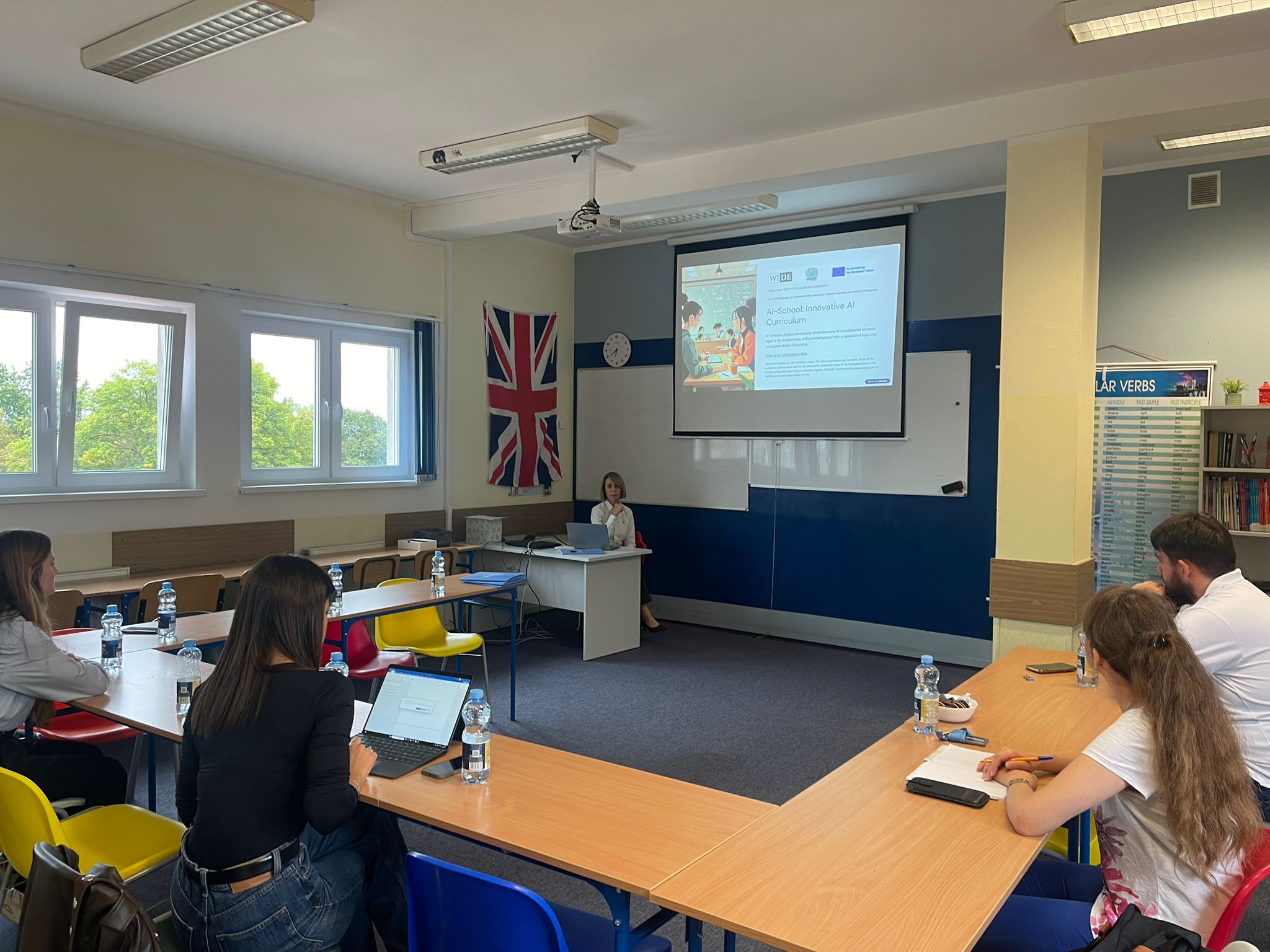
Students use AI tools every day, but often without fully understanding how they work, their opportunities, or their risks. At the same time, teachers need practical materials to support this learning process. To bridge this gap, the project offers a six-module curriculum combining e-learning, workshops, and hands-on activities to promote informed and responsible AI literacy.
Module 1
AI is Alread y Here: Recognizing it to understand it
Objective: Help students recognize AI in daily life and transform familiarity into awareness.
• Distinguish between traditional digital tools and AI applications
• Essential vocabulary for algorithms and automation
• Daily interaction mapping with smart tools
Skills Developed: Critical thinking, active observation, digital language acquisition
Module 4
Creating with AI: between originality and collaboration
Objective: Discover generative tools for text, images, and sound. Focus on co -creation, originality, and responsible use.
Skills Developed: Creativity, Communication, Critical Thinking.
module 2
Behind the Scenes: How an Intelligent Machine works
Objective: Provide intuitive understanding of AI mechanisms - data, algorithms, and learning models.
• Algorithm concepts and step -by- step logic
• Data collection and importance
• Simple training and decision -making examples
Skills Developed: Problem solving, abstraction skills, digital awareness
Module 5
Studing with AI: Tools and Awarness
Objectives: • Strategic use of AI study tools
• Benefits and limitations assessment
• Building autonomous study methods
Skills: Autonomy, self -assessment, curiosity
Module 3
Right, transparent, for whom? Ethics and risks of AI
Objective: Explores transparency, fairness, and accountability in AI systems. Students analyze real cases and discuss algorithmic
bias.
Skills Developed: Critical thinking and responsibility, Argumentative skills, Digital civic education.
Module 6
Computational thinking, coding and robotics
Objectives: • Visual coding principles
• Educational robotics introduction
• Links with mathematics and science
Skills: Collaboration, creativity, logical thinking